
Help around the home
Support with cooking, cleaning, laundry and shopping, so your home stays comfortable and the way you like it.
Person-centred NDIS support · Ballarat & regional Victoria
Supported Independent Living, often shortened to SIL, is one of the supports funded through the NDIS. In plain terms, it is the everyday help that makes it possible to live in your own home and run your own life, whether you live on your own or share with others.
This guide walks through what SIL is, who it tends to suit, what it usually covers, how it fits into an NDIS plan, and how SIL is different from SDA.
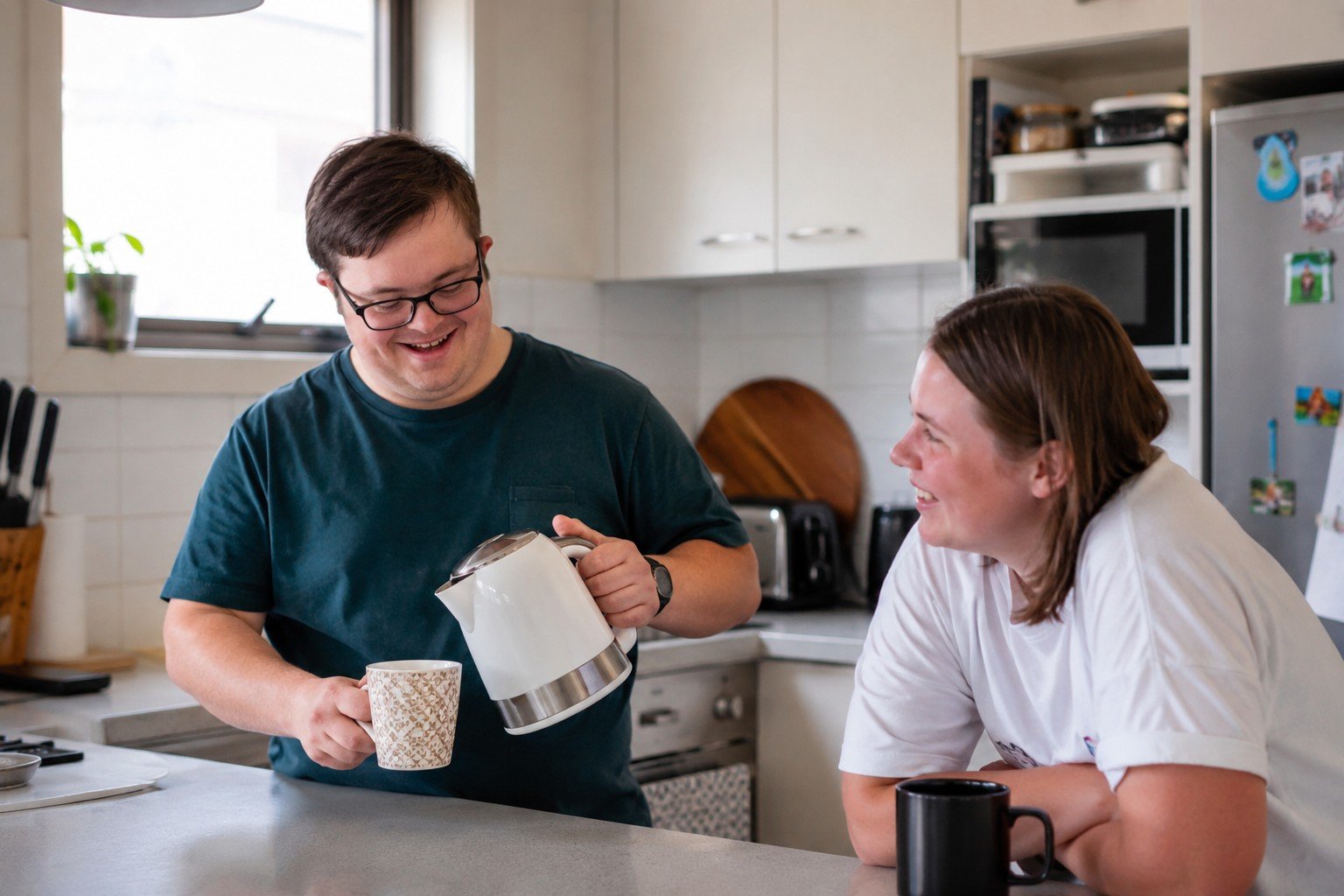
Everyone's NDIS plan and situation is different, so this page is here to explain the basics, not to give advice about your own plan. For guidance on your circumstances, talk to your planner or support coordinator, read more on the official NDIS website at ndis.gov.au, or contact us for a friendly chat.
SIL is not a place. It is the day-to-day support that helps you live as independently as possible in your own home. That support might be with practical tasks like cooking a meal or doing the laundry, with personal care such as showering and dressing, or with building the skills and confidence to do more for yourself over time.
A common way to picture it is this: SIL is the help, and your home is where that help happens. The people who support you can be there through the day, and for many people overnight as well, so that living independently feels safe and steady rather than overwhelming.
SIL tends to suit people who need regular, ongoing support to live independently, rather than occasional help now and then. If you want your own home life but need someone around to make each day work well, SIL may be worth exploring.
It is your goals that lead the way. Whether you are moving out of the family home for the first time, leaving a group setting for something more your own, or simply want more say over how your days run, SIL is designed to support the life you want to live.
Not sure if it fits? You do not have to work it out alone. Reach out and we can talk it through together, with no pressure at all.
Support with cooking, cleaning, laundry and shopping, so your home stays comfortable and the way you like it.
Respectful help with tasks like showering, dressing and grooming, provided in a way that protects your privacy and dignity.
Hands-on support to grow the skills that matter to you, from budgeting and cooking to managing appointments and using transport.
Support with daily routines, prompts for medication, and help through the night where you need it, so you feel secure at home.
SIL can be delivered in a home of your own or in a shared home, with the arrangement that suits you best.
Encouragement to get out, keep up your interests and stay linked to the people and community around you.
SIL is funded through your NDIS plan based on the level of support you need to live safely and well at home. The funding reflects things like how much help you need each day, whether you need support overnight, and whether some of that support can be shared with housemates.
If you think SIL might be right for you, your planning meeting is the place to raise it. A few things can help that conversation go well:
Every plan is different, so treat this as a starting point rather than a rule. Your planner and support coordinator can help you work out what suits your situation.
People often mix these two up because they can go together, but they fund very different things. In short, SIL is the support and SDA is the housing.
Supported Independent Living funds the people and the help: assistance with personal care, daily tasks, skill-building and staying safe. It is about how you are supported, not the building you live in.
Specialist Disability Accommodation funds a home that is built or modified for people with very high support or accessibility needs. It is the physical place, and only some people are eligible for it.
Because they are funded separately, you can have SIL without SDA, SDA without SIL, both together, or neither. Many people who receive SIL live in ordinary homes and rentals, not specialist housing.
A few of the things people ask most when they first hear about Supported Independent Living.
SIL is everyday help that makes it possible to live in your own home as independently as you can, whether you live on your own or share with others. It covers regular support with tasks like personal care, cooking, cleaning, building skills and staying safe.
SIL tends to suit people who need regular support to live independently, often through the day and sometimes overnight. It is usually for higher, ongoing support needs rather than occasional help. Your planner looks at what you need day to day to work out whether SIL is a good fit.
SIL is the support: the people and the help you receive. SDA, or Specialist Disability Accommodation, is the housing: a home built or modified for people with very high support or accessibility needs. They are funded separately, and you can have one, both or neither.
SIL is discussed at your planning meeting and funded based on the support you need to live safely and well at home. It helps to talk clearly about your goals and your daily support needs, and to bring evidence from people like an occupational therapist. This page is general information, so check your own situation with your planner or support coordinator.
No. SIL can be delivered in a home of your own or in a shared home. Sharing is common because some support can be shared between housemates, but the choice about how and where you live is yours.
Talk to us about your goals and your NDIS plan, and we will help you understand your options. There is no pressure, just a friendly chat.
Reach out for a friendly, no-pressure chat about how we can help. There's no obligation, and we're happy to answer any questions.